
However, reality dictates its own terms, and they are significantly more complex than the futuristic scenarios of Hollywood movies. We must learn to distinguish between populist promises and the strategic steps that will actually save us next winter.
The Survival of Concrete Giants vs. Container Solutions
Criticism of large thermal power plants has become a common trope. They are labeled as vulnerable relics of the past, but it is these "concrete frames" that have demonstrated incredible endurance. It has taken the aggressor dozens and even hundreds of strikes to bring these facilities to the brink of exhaustion. A large station is not just generating capacity; it is immense inertia and structural strength.
The equipment inside the machine hall can be replaced or repaired, while the frame itself continues to serve a protective function.
We often hear about distributed generation as a panacea. Certainly, gas-piston units increase system flexibility, but let’s look at the numbers. The consumption of Kyiv alone is about 2 GW. To replace the capacity of the Darnytsia CHP, approximately 800 small container units would need to be installed. Placing such a number of objects within the dense construction of a metropolis, ensuring gas supply to each, connecting them to high-voltage networks, and meeting environmental standards is a colossal challenge.
Furthermore, there is a technical trap: to simplify maintenance, these units will inevitably be grouped in 10–20 units per site. In such a case, we create the same large target for the enemy, but with zero passive protection.
The metal shell of a container cannot withstand even a near-miss explosion, whereas the concrete of a CHP can withstand direct hits.
Underground Energy: The Illusion of Absolute Protection
The idea of building an underground energy system sounds attractive only to those who have never dealt with industrial construction. In global practice, there are no examples of large-scale underground thermal or nuclear power plants. The reason is simple: it requires astronomical budgets and the resolution of unsolvable engineering issues — from giant ventilation systems to ensuring fire safety in confined spaces.
Burying a transformer substation is possible, but burying a coal or gas plant with its boilers and turbines is a project for decades, which we do not have. Our task today is not to dream of underground cities, but to maximally combine active air defense with engineering structures that reduce the probability of critical damage.
The Trap of "Green" Business
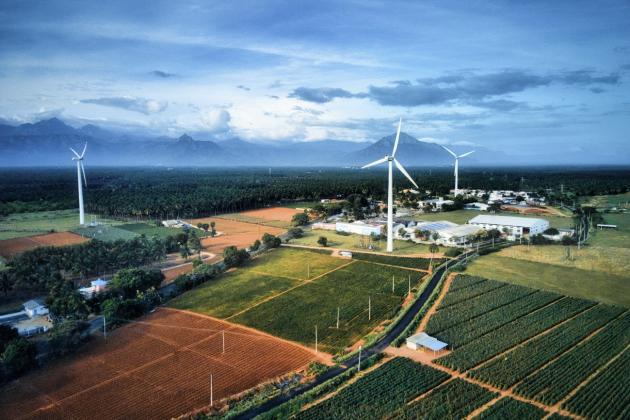
Another layer of myths concerns solar generation. There is a popular opinion that the mass installation of solar power plants (SPPs) will make us independent tomorrow. However, the statistics are relentless: during the winter period in the Kyiv region, an average of only five sunny days per month are recorded.
SPP output in December is ten times lower than in July. This is a source of energy that cannot be relied upon as a base during the most difficult period of the year.
Moreover, solar energy as a business is entering a zone of turbulence. A global trend already reaching Ukraine is negative electricity prices during peak solar hours. In May or June, when there is too much sun and consumption is limited, the price of the resource in the grid drops to zero. In Spain and Germany, SPP owners are already forced to pay to feed energy into the grid during the day. Without the installation of expensive industrial energy storage systems (BESS), solar panels become investment-risky.
Energy Egoism vs. General Security
A curious social and technical challenge has been the mass transition of Ukrainians to household energy storage systems like EcoFlow. For an individual apartment, it is a lifesaver, but for the city's energy system, it is a "silent threat." When power returns after a long blackout, hundreds of devices simultaneously begin to consume maximum power to recharge. The load on internal building networks increases four to five times.
This leads to overheating of wiring, transformer fires at substations, and the failure of smart appliances.
We are dealing with a deficit in network capacity. This is a direct analogy to road traffic: if all residents of a residential area decide to drive onto one narrow road at the same time, the city will come to a standstill in a hopeless traffic jam. Currently, there is no technical solution for remote management of thousands of private batteries; therefore, the only way is conscious consumption and gradual loading of the grid by the users themselves.
Time for Real Steps
We are entering a phase where the time for talk about "innovations of the future" has run out. The new heating season is not a distant prospect, but a harsh sprint of a few months. The main question is not whether modular reactors will appear in ten years, but how many megawatts we can add to the system every week until October.
An energy apocalypse is not inevitable. It becomes a reality only when we give up or wait for a miracle. The combination of restoring traditional generation, targeted implementation of gas units, and attracting international aid for repairing critical nodes are the three pillars of our resilience.
Ukraine has already proven that it is capable of performing engineering miracles. The main thing is to remain grounded in facts, not illusions.