
JSC Energoatom: Vacillation on the Path to an Open System
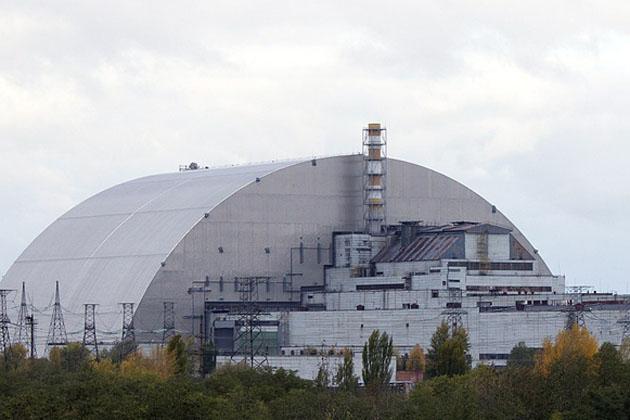
The 40th anniversary of the Chornobyl disaster has come and gone, much like all major milestones do: with appropriate speeches and ritual mentions of "the lessons we have learned." Whether we have actually learned them or not is a question that official events do not and cannot answer. Meanwhile, it was precisely after Chornobyl that the concept of "safety culture" entered international discourse. The state of this culture, rather than the number of wreaths laid, serves as the true indicator of whether we remember the essence of that accident.
This text focuses on the gap between memorial rhetoric and the actual state of affairs in the Ukrainian nuclear industry. More precisely, it addresses how a system that spent decades slowly, despite setbacks and disruptions, moving toward openness has in recent years confidently shifted in the opposite direction. An opaque nuclear sector is not an issue of corporate culture or management style. It is a matter of safety in the literal sense—the very safety that the recent speeches commemorated.
From Soviet Opacity to Openness: The Historical Journey of JSC Energoatom
The Ukrainian nuclear energy sector emerged from an extremely closed system—the Soviet Ministry of Medium Machine Building. This branch ministry was responsible for everything nuclear, from reactors to warheads, and operated under a regime of total secrecy. This legacy proved highly resilient. In the early 1990s, representatives of Ukrainian nuclear generation cooperated closely with Russia and were not inclined to open communication or public disclosure of events in the sector—even though we had inherited the largest accident in history, the lessons of which needed to be studied rather than concealed.
Paradoxically, however, Chornobyl itself became the driving force behind the departure from secrecy. Numerous international projects in the late 1990s and early 2000s accustomed the National Nuclear Energy Generating Company Energoatom (the state operator of all nuclear power plants in Ukraine) to operating differently. The arrival of a young management team with no close ties to Russian nuclear structures (during Yuriy Nedashkovskyi’s first tenure) allowed for several serious steps forward.
Hopes for a nuclear renaissance in 2004 and the commissioning of two new power units brought us closer to Russia once again. At that time, Moscow also took steps that could be interpreted as a movement toward openness. As it turned out later, this movement led in an entirely different direction: toward political-nuclear projects targeted at the countries of the Global South. Today, Rosatom is a sponsor of international terrorism. The illusion of openness carries a heavy price.
The victory of Yushchenko and the launch of a series of new regulatory documents allowed the Ukrainian system to truly open up: to speak freely about its own flaws and seek ways to improve. However, we remained shackled by Soviet-era performance-indicator thinking, where people are punished for figures rather than the actual state of affairs. This was further reinforced by the operational methods of the Moscow center of the World Association of Nuclear Operators (WANO, an international organization that conducts peer reviews of nuclear power plants globally). This is, of course, an evaluative judgment open to debate. Nonetheless, the personnel were no longer willing to tolerate the ignorance of managers making groundless decisions; the workforce possessed a sufficiently independent trade union and access to various independent media outlets. With the return of Yanukovych, the system began to close off again.
The true flowering of openness and the final break from Russia occurred after 2014, when Nedashkovskyi returned once more. Many genuinely positive developments took place. Concurrently, however, steps were taken that subsequently allowed individuals who were not proponents of an open system to rise to power and dismantle it. Personnel policy proved to be the weakest link: excellent initiatives regarding the talent pool and introducing young professionals into leadership structures were not fully realized.
In parallel, within the State Nuclear Regulatory Inspectorate of Ukraine (SNRIU—the state body that issues licenses to nuclear plants and monitors their safety), the dismantling of the institution of the independent Chief State Inspector began. This process concluded definitively in 2020, which also negatively impacted the independence of the company's performance assessments. Overall, the years 2014–2019 at Energoatom passed under the banner of developing an open, self-regulating company that valued every employee—even those who did not support the "general line of management"—provided they were committed to a safety culture: knew their job, performed it conscientiously, and strived for improvement. This is precisely why this system resisted the changes pushing it back toward opacity for nearly half a year.
Why Closed Systems Are Dangerous: Safety Culture Explained Simply
Let me explain to the reader why this truly matters. From an expert perspective, the facilities and companies most vulnerable to incidents with significant consequences are those where the safety culture is weak. The logic is simple: minor incidents are concealed at all levels, they are not analyzed, and the possibility of their recurrence is not eliminated. This creates a whole cloud of "bubbles"—small, hidden problems that may one day accidentally combine into one major crisis. Should that happen, the nuclear energy sector will suffer another blow from which it will take decades to recover.
Why am I not speaking of a "new Chornobyl" or a repetition of Fukushima (the Japanese NPP where a reactor core meltdown occurred at three units after an earthquake and tsunami in 2011)? Because I am aware of another incident that occurred much earlier: in March 1979, a severe core damage accident occurred at the American Three Mile Island NPP, marking the first major accident of such scale in history. The world remained largely unaware of its potential severity because the reactor's containment building retained the radioactive substances inside. All power units at Ukrainian NPPs also feature similar protective airtight structures—a localization containment loop. This is our final line of defense, and no savings should be made on it.
However, a safety culture is not only about how internal corporate life is organized. It also relies on the presence of state oversight in the form of professional, experienced regulatory bodies—primarily in the field of nuclear safety, though oversight of electrical equipment, occupational hazards, and the environment remains equally essential. Furthermore, it requires their competitive interaction, openness, and accountability to society. I am deeply convinced that competitiveness provides the best opportunities for development, while openness allows for finding the best known solutions and preemptively eliminating previously undetected risks through risk-informed analysis of even the smallest deficiencies.
I know that some specialists—those who take a narrow view and are not closely acquainted with the recommendations of the International Atomic Energy Agency (IAEA) and ISO standards—will view my thesis on an open, competitive system in the nuclear industry with skepticism. Yet, I am convinced that our strength and capabilities lie precisely in the diversity of solutions and the availability of choice.
Naturally, Ukraine has a document titled "General Safety Provisions for Nuclear Power Plants" (the fundamental regulation of the SNRIU outlining all key safety requirements for NPPs). It delineates the main aspects of safety culture. However, it contains no direct reference to openness toward the public—which, in my view, is an omission by the regulator. At the same time, JSC Energoatom itself, in its "Safety Policy" statement, commits to "ensuring constant communication with the public, informing them about the safety status and activities aimed at improving safety levels." This phrase is simply copied from the relevant section of regulatory rules. Following the logic of regulatory framework design, the company should have issued a dedicated policy on openness or at least expanded upon and clarified its actions and expectations. It did not.
Current Situation and the Role of the Supervisory Board
By mid-2020, all major personnel changes had taken place, and the system began to close off, primarily in terms of information transparency. When management loses the ability to hear external signals, it simultaneously loses agility, the capacity to self-improve, and the ability to respond to challenges. Unfortunately, the system became completely closed after the start of the full-scale war. A classic example of a closed system is a command economy: goals are set from above, and connections with the external environment are limited. Similarly, the separate subdivisions (NPPs that form part of Energoatom as its structural units) are becoming closed off: any leaks or disclosures of undesirable information are treated as provocations, while any new idea not handed down "from the top" is viewed as a betrayal.
Against the backdrop of political and social shifts, along with the arrival of the new supervisory board, Energoatom's separate subdivisions have finally turned inward. They do not function as a harmonious whole with a unified technical and social policy that aligns with public interests. Due to various circumstances—both objective and subjective—the supervisory board has been unable to establish real control over the current management board and the plants themselves. The situation we find ourselves in is straightforward and alarming: as of now, Energoatom is controlled neither by the state nor by society. One can only hope that fair, open competitions will allow for an update of the management board and return the company to the path of openness.
Henry Ford is credited with the phrase: "I want my subordinates to always tell me the truth—even if I fire them afterward." In the current circumstances, the supervisory board should establish its own system for obtaining relevant information, rather than relying solely on the management board and separate subdivisions. The trade union, journalists, experts, and personal contacts outside of Energoatom are all sources that a supervisory board wishing to truly govern cannot afford to ignore. Furthermore, the management board must be staffed with self-sufficient individuals capable of expressing and justifying their opinions without clinging to their positions at all costs.
Conclusion
The conclusion I wish to draw is simple: "What does not kill us makes us stronger" (Friedrich Nietzsche). A strong safety culture ensures a strong, stable company even under wartime conditions. Specifically:
A company that identifies, studies, acknowledges, and eradicates its weaknesses will continuously grow stronger;
A company that listens to criticism and engages in dialogue on these topics grows stronger;
Studying and implementing the experience of other open companies in the sector also brings strength.