
But let us soberly analyze the facts.
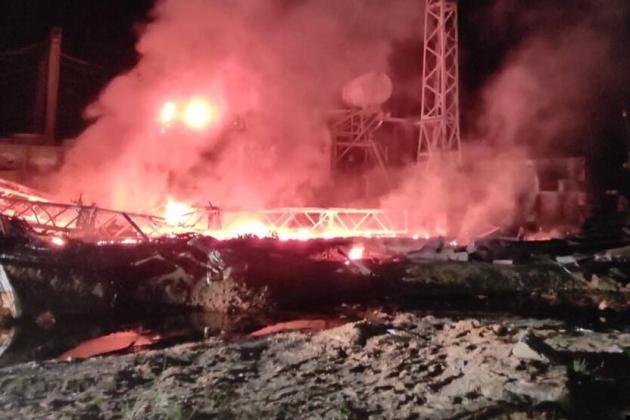
The sole reason for electricity cut-offs is enemy attacks on energy infrastructure. There is no such thing as "electricity export," or "separate agreements on whether to disconnect certain consumers." It is exclusively the destruction of energy facilities.
Every strike on the energy system, regardless of whether it hits a large power plant or substation, or a smaller facility, changes the operating mode of the electric grids. This change requires an immediate response, altering the scheme and limiting consumers to balance the energy system at its various levels. This is the job of the dispatchers of Distribution System Operators and the System Operator Ukrenergo.
In October, the enemy destroyed almost all generation capacity on the Left Bank of Ukraine and the substations used to transmit electricity from the west to the east. Residents of the Left Bank of Kyiv and Kyiv Oblast immediately felt this.
The enemy has changed its strike tactics; now, even the smallest energy facilities in cities and towns are being targeted, where it is impossible to deploy expensive air defense systems. They are also hitting coal mines, enrichment plants, and gas production and transmission infrastructure.
The war statistics are as follows:
-
Since the beginning of the war, the Russians have destroyed and occupied 19 GW. Before the war, we had a surplus of capacity. Now, there is a chronic deficit.
-
60% of gas production has been lost, which is why Ukraine is forced to urgently import additional volumes of gas.
To get through the winter, Ukraine needs approximately 18 GW of capacity. We have 16-17 GW. The Russians are not yet attacking our NPPs (Nuclear Power Plants); thanks to this, we have 6-7 GW of base capacity. However, they are hitting the transmission system, which complicates the transfer of electricity generated at the NPPs. The conclusion is that outage schedules are the only way to evenly distribute the insufficient electricity supply.
In subsequent posts, I will explain why the outages are uneven across the country, the connection between strikes on gas infrastructure and electricity supply, and why shelters do not always save facilities from destruction.
The Russians seek to destroy our energy sector and force us to capitulate in the darkness and cold. The situation is difficult, but no one is giving up. All services—energy workers, gas workers, rescuers—are working at the limit of their capabilities. Every saved kilowatt matters now. If possible, do not turn on several powerful electrical appliances simultaneously; this will help the energy workers and the country.